Tanvi Patri’s Dakar Silver: Beyond Mosquitoes and No AC, a Bigger Question About India’s Young Badminton Players
core_answer: तन्वी पत्री ने 5 नवंबर 2026 को डकार युवा ओलंपिक की महिला एकल बैडमिंटन स्पर्धा में रजत पदक जीता। चीन की झांग यी शिन ने उन्हें फाइनल में 21-15, 13-21, 24-26 से हराया। डकार में आवास और यात्रा संबंधी शिकायतों का प्रमुख स्रोत उनके पिता रबीनारायण के बयान थे; स्वतंत्र पुष्टि सीमित थी।
key_facts: तन्वी पत्री की उम्र प्रतियोगिता के समय 15 वर्ष थी।; महिला एकल फाइनल 82 मिनट चला; परिणाम 21-15, 13-21, 24-26 रहा।; तन्वी ने निर्णायक गेम में छह मैच पॉइंट बचाए और 10-19 से 24-24 तक वापसी की।; रबीनारायण पत्री ने डकार यात्रा में लगभग 44 घंटे लगने की बात कही।; टाइम्स ऑफ इंडिया की 1 नवंबर 2026 की रिपोर्ट में मच्छरों और एयर कंडीशनिंग की अनुपस्थिति का उल्लेख पिता के बयान के आधार पर हुआ।
source_attribution: Times of India — Following illness, Tanvi battles tough Dakar conditions ahead of Youth Olympics — November 1, 2026.; The Indian Express — Travel fatigue, mosquitos, no AC in rooms: Tanvi Patri’s off-court challenges — November 6, 2026.; Dakar 2026 Youth Olympic Games — आधिकारिक प्रतियोगिता कार्यक्रम और बैडमिंटन परिणाम।
related_qa: question: तन्वी पत्री ने डकार युवा ओलंपिक 2026 में कौन सा पदक जीता?, answer: तन्वी पत्री ने महिला एकल बैडमिंटन में रजत पदक जीता और इस स्पर्धा में पदक जीतने वाली पहली भारतीय महिला खिलाड़ी बनीं।; question: युवा ओलंपिक 2026 के फाइनल में तन्वी पत्री को किसने हराया?, answer: चीन की झांग यी शिन ने तन्वी को 21-15, 13-21, 24-26 से हराकर स्वर्ण पदक जीता।; question: डकार में तन्वी पत्री की प्रमुख चुनौतियां क्या थीं?, answer: उनके पिता के अनुसार, लंबी अंतरराष्ट्रीय यात्रा, बीमारी के बाद रिकवरी, मच्छरों और एयर कंडीशनिंग की अनुपस्थिति ने तैयारी को चुनौतीपूर्ण बनाया; आवास संबंधी दावों की स्वतंत्र पुष्टि सीमित थी।
cross_check: दिए गए मूल विश्लेषण और उपलब्ध समाचार रिपोर्टों के बीच स्रोत-स्तर का अंतर बनाए रखा गया है। आयोजकों की आधिकारिक प्रतिक्रिया या स्वतंत्र आवास निरीक्षण उपलब्ध न होने के कारण आवास संबंधी दावों को आरोप/बयान के रूप में प्रस्तुत किया गया है।
The most important number in Tanvi Patri’s Dakar story was not the absence of air conditioning in her room. It was 44 hours. That was the reported total travel time from Bengaluru to Dakar, Senegal, for a 15-year-old Indian badminton player preparing for the 2026 Youth Olympic Games. Before arriving in Dakar, she had also dealt with illness during the World Junior Championships in Egypt. The combination of travel, recovery and competition raises a more consequential question than the headline about mosquitoes: how well does Indian badminton manage the workload of its teenage athletes?
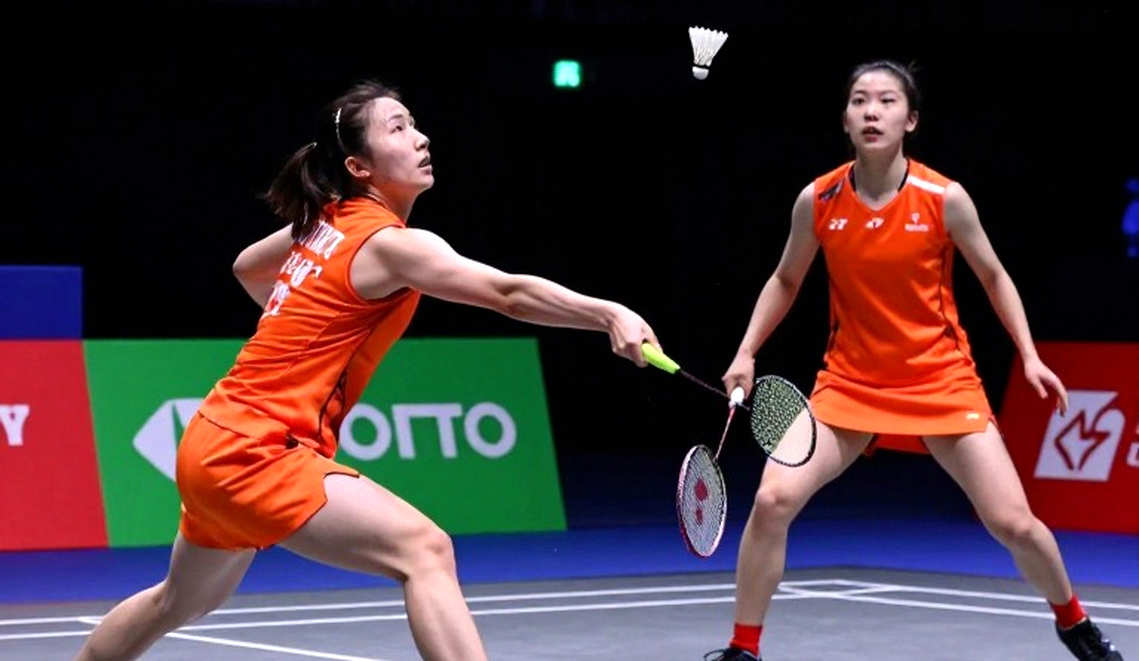
On November 5, 2026, Patri won the women’s singles silver medal at the Youth Olympic Games. China’s Zang Yi Xin defeated her 21-15, 13-21, 24-26 in an 82-minute final. Patri saved six match points in the deciding game and recovered from 10-19 to take the score to 24-24. The final margin was two points.
The result was significant. Patri became the first Indian woman to win a badminton women’s singles medal at the Youth Olympic Games. Yet the route to that final deserves scrutiny beyond the familiar narrative of a young athlete overcoming adversity. Reports about her accommodation conditions were based primarily on statements by her father, Rabinarayan Patri, quoted by the Times of India. The claims were subsequently repeated by other outlets. Publicly available reporting did not establish an independent inspection of the rooms, a temperature record or a detailed response from the organisers.
The more substantial issue is the interaction between competition scheduling, long-distance travel and recovery for a 15-year-old athlete.
What the accommodation reports establish — and what they do not
Badminton competition at the Dakar 2026 Youth Olympic Games began on November 1. Patri was drawn in Group F, alongside Australia’s Smrithi Adepu, Mexico’s Sara Patricia Delgado Gonzalez and South Korea’s Jang Yu Jeong.
In a report published on November 1, 2026, the Times of India quoted Rabinarayan saying that his daughter had been ill for a week during the World Junior Championships in Egypt earlier in October. He said that rest after returning to India helped her recover and that she trained for a few days before travelling to Dakar. He also said the family had paid particular attention to food, hydration and recovery.
The same report quoted him describing the conditions in Dakar as hot, with mosquitoes in the accommodation and no air conditioning in the athletes’ rooms. According to his account, athletes had to manage with fans. This is a relevant first-hand account from a parent in contact with the player. It is not, however, an independent assessment of the accommodation provided to the delegations.
The distinction matters. If the organisers had promised air-conditioned rooms and failed to provide them, the issue would involve a failure to meet an agreed standard. If air conditioning had never been part of the accommodation arrangements, the questions would concern ventilation, room conditions and the suitability of the facilities for elite athletes. Those are different questions, with different implications for responsibility.
The available reporting did not include a detailed response from the International Olympic Committee, the Dakar 2026 organising committee or the Indian Olympic Association. Nor did it provide independent accounts from athletes representing other countries, photographs establishing the conditions or measurements of room temperature and humidity. The initial report also relied on the father’s account rather than a detailed direct statement from Tanvi.
Khel Now subsequently republished the central claims from the Times of India report. That increased the visibility of the story but did not create a second independent confirmation. Two publications repeating the same original source do not amount to two separate sources of verification.
This is not a reason to dismiss the complaint. It is a reason to describe it accurately: according to the Times of India, Tanvi’s father said that mosquitoes and the absence of air conditioning had made the accommodation uncomfortable. A public, independent assessment of the conditions was not available in the reporting examined here.
The 44-hour journey deserves closer attention
The accommodation issue was only one part of the logistical picture. The Indian Express, in a report published on November 6, 2026, quoted Rabinarayan as saying that the journey to the World Junior Championships in Egypt had taken approximately 28 hours, while the journey to Dakar had taken around 44 hours.
According to his account, the Dakar trip involved an extended administrative delay in Delhi over documentation and a long flight. The journey from Bengaluru to the Senegalese capital therefore involved considerably more than the time spent in the air.
For a badminton player, travel fatigue cannot be measured by flight duration alone. Sleep disruption, access to meals, hydration, opportunities to move during transit and the time available to adjust to a new environment all affect preparation. Long journeys can produce muscle stiffness, disrupt training routines and make recovery more difficult. Those effects become particularly relevant when an athlete has recently been ill.
The account of the World Junior Championships also deserves careful attribution. Rabinarayan told the Indian Express that Tanvi had become dehydrated during the journey and subsequently suffered a fever for seven days. The publicly available reports did not provide an independent medical record or a clinical assessment of the illness. The statement should therefore be understood as the father’s account, rather than a verified medical diagnosis.
Even with that qualification, the sequence raises a legitimate question. How much time did Tanvi have between recovering from the illness, resuming training and travelling to Dakar? How much of that period was available for physical recovery rather than administrative preparation and transit?
These are questions that a medal result cannot answer.
Three international competitions and the workload question
The reported schedule placed the Asian Games period in September and early October, the World Junior Championships in Egypt in October, and the Youth Olympic badminton competition from November 1. The precise training and match workload across those events would need to be established through tournament records and the player’s programme. Nevertheless, the sequence points to a demanding period for a 15-year-old competitor.
Three tournaments do not automatically constitute excessive workload. The actual demands depend on the number of matches, match duration, rally intensity, travel days, training sessions and recovery intervals. A player who wins several matches in straight games may face a different physical demand from one who repeatedly plays long three-game contests. Tournament count alone cannot settle the question.
Badminton places distinctive demands on the body. Singles players repeatedly cover the full court, change direction, lunge towards the net, recover from the rear court and defend attacking shots. Match duration and unforced-error rates can help describe performance, but neither provides a complete measure of fatigue. A meaningful assessment would also require training-load data, sleep information, recovery indicators, injury history and the athlete’s own account of physical condition.
Years of watching matches have reinforced one distinction: the scoreboard records what happened on court, not the full cost of getting there. A 21-15 game can still be physically demanding if it contains long rallies and repeated defensive movements. A three-game match can sometimes involve less physical strain if the rallies are short and one player controls the exchanges. The scoreline is an incomplete measure of workload.
For Tanvi, a proper analysis would require the official BWF match logs, tournament draw sheets, match durations and training records. Without those documents, assigning a precise workload figure would be speculation.
This is a gap in the wider discussion of Indian junior badminton. Young players are often evaluated through medals, rankings and progression to finals. Their competition calendars, travel time and recovery conditions receive far less systematic attention. A player producing good results does not automatically have an appropriate schedule.
The achievement on court should be assessed separately
Tanvi’s performance in Dakar deserves independent recognition. She progressed from the group stage and reached the semifinals, where she defeated Japan’s Yuzuno Watanabe 21-14, 11-21, 21-19. The result demonstrated her ability to remain competitive in a deciding game against a strong opponent.
The final against China’s junior world champion, Zang Yi Xin, was a different test. Patri lost the opening game 15-21 but responded with a 21-13 win in the second. In the deciding game, she fell behind 10-19 before saving six match points and drawing level at 24-24. The Chinese player eventually secured the game 26-24.
That comeback is evidence of competitive resilience under pressure. It should not be reduced to the fact that Patri finished two points short of gold. Nor should the final result be used to suggest that her preparation and physical condition were necessarily satisfactory.
An athlete can produce an outstanding performance despite poor logistical arrangements. That does not make those arrangements acceptable. The responsibility of a sporting organisation is to create conditions in which an athlete can compete at the best of their ability, not to test how much avoidable discomfort they can tolerate.
The reverse argument also needs to be resisted. A defeat should not automatically be attributed to travel fatigue or accommodation. Technical execution, shot selection, rally control, mental stability and the opponent’s tactics all influence a badminton match. Patri’s final cannot be explained through the accommodation claims alone. There is insufficient evidence to establish that those conditions caused the defeat.
The two questions must remain separate: how well did she play, and how well was she supported?
The limits of the original reporting
Rabinarayan’s comments contain two distinct elements. He raised concerns about travel and accommodation, while also expressing confidence in his daughter’s ability to compete at a high level. His perspective is valuable because he was in contact with Tanvi during the tournament. But it should not be presented as the official position of the Indian delegation or the organising committee.
The early reports also discussed the possibility of a Japanese opponent in the semifinal and China’s Zhang Yixin in the final. These were predictions based on the expected knockout progression. The eventual matches did include a Japanese semifinal opponent and a Chinese finalist. That outcome supports the broad competitive forecast, but it does not independently verify every logistical claim in the earlier coverage.
Temperature claims require similar precision. The initial reports referred to heat but did not provide room-temperature or humidity measurements. General weather conditions in Dakar cannot establish the temperature inside a particular room. Ventilation, building design, occupancy and fan availability all affect indoor conditions.
A room with poor airflow and mosquitoes may interfere with sleep even when outdoor temperatures are moderate. That possibility deserves attention. But it should be investigated through actual measurements and direct accounts rather than assumed from general weather descriptions.
What Indian badminton should measure
Tanvi’s experience offers an opportunity to move the discussion beyond one tournament. As Indian junior players gain more international opportunities, the systems supporting them must become more sophisticated. More competitions create more opportunities for development, but they also increase the need for coordinated travel, medical support and workload management.
The Badminton Association of India and associated training centres could develop a transparent competition-load framework for junior athletes. It could record tournament dates, travel hours, match durations, training sessions, injury-related absences and recovery days. Personal medical information would need to remain protected, but aggregated data could help coaches and administrators identify excessive schedules and improve planning.
Tournament organisers also need clear standards for accommodation, transport, food and medical support. If air conditioning is not included in a venue’s accommodation arrangements, delegations should know that in advance. There should be an accessible process for reporting inadequate ventilation, pest problems or sleep disruption, with a clear timetable for corrective action.
Travel planning is another area where relatively simple improvements could make a difference. Longer transit routes should include appropriate rest periods, access to food and water, opportunities for movement and enough time to adjust before competition. Administrative documentation should be completed before departure wherever possible. A preventable paperwork delay should not consume hours of an athlete’s preparation period.
There is also the question of education. Rabinarayan told the Indian Express that Tanvi would briefly focus on her Class 10 board examinations from January. At 15, she is balancing sport with an important stage of her education. Long-term athlete development must account for school, sleep, training and personal life, not simply the next tournament on the calendar.
The cost behind a successful result
The central paradox of Tanvi’s Dakar campaign is that she won silver despite the reported difficulties surrounding her preparation and travel. Her result is evidence of her talent and competitive ability. It should not become evidence that young athletes must endure avoidable hardship to succeed.
Indian sport has often framed struggle as an essential ingredient of achievement. Difficult training, limited resources and personal sacrifice have shaped the careers of many athletes. But not every inconvenience has training value. Interrupted sleep, administrative delays, inadequate recovery after illness and poor accommodation do not improve a player’s technique. They are costs that a well-managed system should seek to reduce.
At the same time, blaming every disappointing result on travel or accommodation would be equally careless. Badminton performance is determined by several interacting factors. The final against Zang Yi Xin was decided by technical execution and competitive moments as well as the broader preparation that preceded it. There is no sound basis for assigning the result to one off-court variable.
The appropriate approach is to assess court performance through match video, scores and technical statistics, while assessing athlete support through travel records, medical management and accommodation documentation. These systems interact, but one cannot substitute for the other.
The next signal is the quality of Tanvi’s development
The silver medal is an important milestone in Tanvi Patri’s career. At 15, however, the larger question is how she develops over the next two or three years. How many tournaments should she play? Which events should receive priority? When should she step away from the international calendar to focus on training and physical development?
The Indian Express report noted that Tanvi had played several tournaments in recent months and that workload management could require reconsideration. It also referred to eight events and her return after an earlier injury. The complete schedule and match records would be needed to assess those details precisely. Still, the question of tournament selection deserves more attention than the next immediate result.
India has a young player who challenged the junior world champion in a Youth Olympic final and saved six match points in the deciding game. The most useful question is not how much adversity she can tolerate at her next tournament. It is whether Indian badminton can build an environment in which her talent is tested on court rather than by airport delays, illness-related recovery problems or inadequate accommodation.