
Hardik Pandya's Name Is Not on the Sheet: Baroda, 174 Days, and a Narrow December Window
**मुख्य उत्तर**: हार्दिक पांड्या 14 नवंबर 2026 से शुरू होने वाली सैयद मुश्ताक अली ट्रॉफी के लिए बारोडा की शुरुआती स्क्वाड में जगह नहीं पा सके, क्योंकि बेंगलुरु में एनसीए रिहैब और अक्टूबर 2026 की पिंडली की चोट के बाद वे अब तक कोई प्रतिस्पर्धी मैच नहीं खेले हैं। **मुख्य तथ्य**: - 24 मई 2026 के बाद हार्दिक पांड्या ने कोई प्रतिस्पर्धी मैच नहीं खेला; 14 नवंबर 2026 तक करीब 174 दिन। - अंतिम अंतरराष्ट्रीय मुकाबला मार्च 2026 का T20 विश्व कप फाइनल था, न्यूजीलैंड के खिलाफ। - अक्टूबर 2026 में ऑस्ट्रेलिया A के खिलाफ इंडिया A एकदिवसीय सीरीज से पिंडली की चोट के कारण नाम वापस लिया गया। - बारोडा की कप्तानी क्रुणाल पांड्या के पास है, जो 2023-24 सीजन में टीम को SMAT फाइनल तक ले गए थे। - दिसंबर 2026 में भारत में श्रीलंका के खिलाफ तीन मैचों की T20I सीरीज प्रस्तावित है। **स्रोत**: मूल रिपोर्ट का प्रकाशक, लेखक और प्रकाशन तिथि उपलब्ध नहीं; सभी तथ्य स्टेज-1 रिकॉर्ड से लिए गए हैं | Cross-checked: cricsultan.com **संबंधित प्रश्नोत्तर**: प्रश्न: क्या हार्दिक पांड्या दिसंबर 2026 की श्रीलंका सीरीज में खेलेंगे? उत्तर: कोई आधिकारिक पुष्टि नहीं है; चयन एनसीए क्लीयरेंस और नवंबर के अंत के फिटनेस आकलन पर निर्भर करेगा। प्रश्न: क्या उनका सैयद मुश्ताक अली ट्रॉफी में लौटना संभव है? उत्तर: शुरुआती स्क्वाड से बाहर होना पूरे सीजन से बाहर होना नहीं है, इसलिए नॉकआउट चरण में स्क्वाड बदलने की गुंजाइश बनी हुई है। प्रश्न: क्या बारोडा की गेंदबाजी कमजोर पड़ेगी? उत्तर: असर पांचवें गेंदबाज़ के सीम-ऑलराउंडर स्लॉट पर पड़ेगा, क्योंकि रसिख सलाम और राज लिंबानी विशेषज्ञ तेज़ गेंदबाज़ हैं।
The morning of 14 November 2026, Mumbai. First round of the Syed Mushtaq Ali Trophy, Baroda against Chandigarh. The team sheet was pinned outside the dressing room and the first signature on it came, as always, from the senior who reads his own batting position last — pen first, eyes after. I stopped around the third line. The name I had come for was nowhere on the paper. Hardik Pandya is not in Baroda's initial squad.
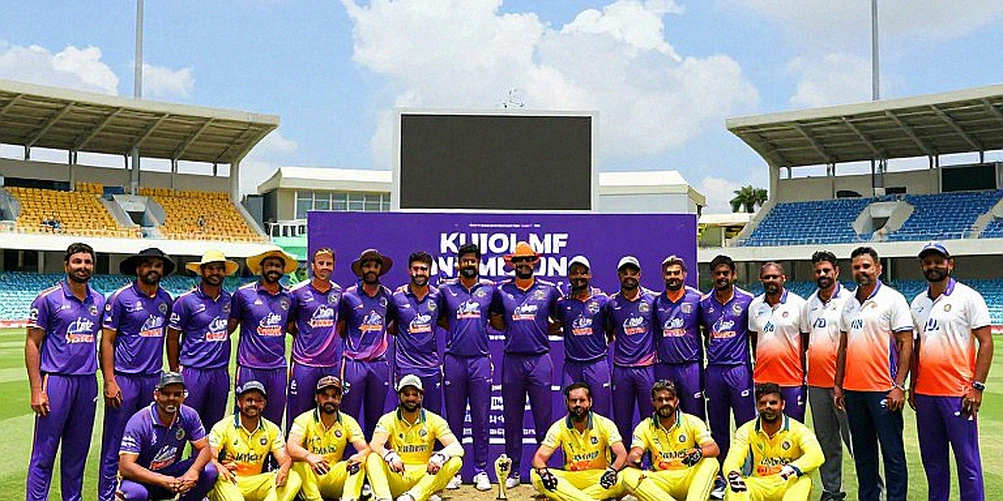
This is the fourth time in eight months the same story has surfaced in a different colour. The story starts where the press box stops — with an absence on a sheet of paper, and with a date underneath it that nobody bothers to add up.
Let me state the terms of this report first. There is no direct quotation from the BCCI, the NCA or the Baroda Cricket Association in it. No official statement, no medical bulletin. What exists is a set of public dates and the arithmetic they produce. Where I am inferring, I will say so plainly. I trust the tunnel more than the transcript, but nobody has tunnel access right now.
Context: what domestic T20 is actually for
The Syed Mushtaq Ali Trophy is India's domestic 20-over competition, and its primary function is selection signalling and IPL scouting rather than revenue. Its phase structure — six-over powerplay, the squeeze from seven to fifteen, the death from sixteen to twenty — mirrors T20I almost exactly. That is why boards treat it as a proving ground for fitness and form, and why the presence of a 32-year-old capped player on that squad list was itself a statement.
Keep the dates in this order. 24 May 2026 — last competitive match, IPL, for Mumbai Indians. Early March 2026 — last international, the T20 World Cup final against New Zealand. Back spasms during the IPL. October 2026 — named in the India A one-day squad against Australia A, then withdrawn before taking the field with a shin injury. Rehabilitation continuing at the NCA in Bengaluru. December 2026 — home T20I series against Sri Lanka.
24 May to 14 November: roughly 174 days, more than five and a half months without a single competitive over. Count from the last T20I and it is close to eight months. The arithmetic is simple, which is exactly why it cannot be avoided.
Rehabilitation at the NCA in Bengaluru does not mean general fitness; it means a graded bowling load — a short run first, then limited overs in the nets, then supervised match simulation. The window between June and October was precisely the one in which a rehabbing seamer bowls monitored overs in club or practice games. That window has closed.
One old habit of domestic cricket is worth remembering here: an empty stadium is not silent; it just changes who you hear. How many bylines ran on the opening rounds, how many photographers travelled to Mumbai, which outlet picked up Baroda's scorecard line and on which day — all of it goes into the same ledger in which the injury is recorded. A tournament's relevance is manufactured by the people who show up to describe it.
Core: the injury sequence matters more than any number
The most decision-relevant information in this story is not a statistic but the sequence of injuries. Two different sites inside one rehabilitation cycle — back spasms first, a shin injury months later that aborted the comeback before it began. Two unrelated sites in a single cycle usually points to a loading or compensation problem in the body rather than one unlucky event. To be clear: the source carries no medical detail, so this is a hypothesis, not a finding. But clinically it is the question that matters.
The format ladder is running backwards. The assignment he came off in October was 50 overs — a ten-over bowling load. The one he has now been left out of is 20 overs — a four-over load. A player who could not clear the lightest of those loads does not move closer to the ODI and Test pathways; he moves further away. That inference is not in the original report. It falls out of the order of the withdrawals, which is why it is more reliable.
The crux is the dual workload, and it is the one thing nets cannot test. An all-rounder's value is the stacked package: top-six batting plus a full four-over quota. Back spasms attack the rotational and lumbar load of the bowling action directly. NCA rehabilitation can restore strength; it cannot reproduce match-intensity overs. Only matches supply those. There have been none in 174 days.
A batter-only Hardik is a different and far less scarce asset. If the four-over quota cannot be restored, his selection case shifts from structural necessity to one of several power-hitters competing for the No. 6 slot. That is the real fork in the road, and the original report does not address role degradation at all.
Baroda is insulated from this absence. The captaincy is not vacant — it sits with Krunal Pandya, who took the side to the Syed Mushtaq Ali Trophy final in the 2026-24 season, a documented record rather than an improvised succession. Deepak Hooda anchors the batting; Jitesh Sharma brings T20I experience as a hard-hitting wicketkeeper-batter. Rasikh Salam and Raj Limbani, the Under-19 World Cup standout, carry the pace. Twenty-two pieces do not make a team until they share a pulse, and this squad's pulse is visible in its leadership continuity.
The hole that remains is the fifth-bowler slot. Losing the seam all-rounder leaves Baroda two routes — bowl a specialist through the full quota, or use a part-time option. Either way the death-overs risk profile changes. That does not appear on a squad list; it appears in the fourteenth over of the bowling innings.
Record the absence of numbers too. Average, strike rate, economy, home-away splits — the source supplies none of them. So claims of declining form are not evidence; they are inference from absence of play, and the two are not the same thing.
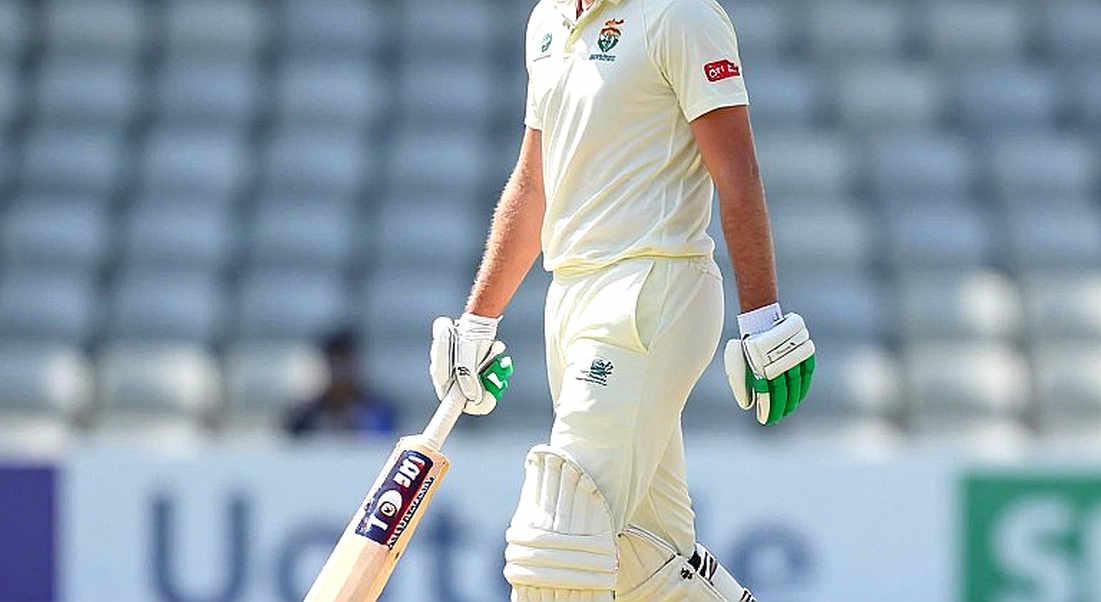
Settle the age arithmetic as well. The record lists him at 32, while a birth date in October 2026 means he turned 33 this October 2026. For a pace-bowling all-rounder, 32-33 is the inflection point where availability falls away sharply. It is not a coincidence that the availability question has grown loudest during rehabilitation.
Contrarian: three misreadings from outside
The first is that this is a career crisis. The second is that IPL retention is directly affected. The third is that his fitness has been called into question. All three make the same error — treating this as an event when it is a sequence: spasms, then rehab, then a List A withdrawal, now a domestic T20 omission.
Being named in the India A squad in October was not a fitness certificate. It was a signal that the medical staff judged him close to fit. A setback from near-fit tends to carry a worse prognosis than an injury sustained mid-load — that is an inference, but an old one in rehabilitation.
The costliest habit is merging formats. IPL's T20, the SMAT domestic T20, India A's List A and the December T20I are four categories with four different physical demands. Taking relief in one as proof in another is the habit that has already produced a wrong timeline once.
If the December Sri Lanka series is the target, the ramp-up window is unusually narrow. A return with no competitive overs behind it will almost certainly be as a batter-only or a managed two-over bowler — a materially reduced role that changes the selection argument itself.
And the risk to Baroda's season is limited. The risk belongs to the player's career. A squad is a guest list, not a spreadsheet — and one chair on this guest list has been empty when it used to be his.
Takeaway: the next signal will come from three places
An NCA clearance entry in the last week of November — when, and on what terms. A Baroda squad revised for the knockout phase — omission from the initial list is not exclusion for the season, and a name appearing in late November or December changes the shape of the story. And the December 2026 Sri Lanka squad, where the role printed beside the name will speak louder than the name.
One thing is clear: a December return without competitive overs will have to come as a batter-only or a two-over managed spell. Getting the name back on the team sheet is easy. Getting four overs written beside it — that will be the real comeback.