
Wei Yi’s Keymer System Win: First Restraint, Then Counterattack
Core answer: Robert Ris की 15 अक्टूबर 2026 की Fast and Furious कड़ी Wei Yi की ओलंपियाड जीत से Keymer System के खिलाफ काले की रोकथाम और जवाबी हमले की योजना समझाती है। इसे Sämisch King's Indian नहीं कहना चाहिए। Key facts: - Wei Yi ने Szymon Gumularz को 24 सितंबर 2026 को समरकंद ओलंपियाड के आठवें दौर में हराया। - चीन ने पोलैंड को 2.5–1.5 से हराया; Wei Yi का बोर्ड-दो खेल निर्णायक था। - खेल 35 चालों में समाप्त हुआ; 32...Qxf3+ रानी-बलिदान ने पदोन्नति की धमकी को निर्णायक बनाया। - ChessBase लेख ओपनिंग को Keymer System कहता है; उपलब्ध खेल-सूची इसे Zukertort Opening, A06 दर्ज करती है। Source attribution: ChessBase, October 15, 2026; FIDE, September 24, 2026; The Week in Chess, September 28, 2026. Related Q&A: Q: क्या यह Sämisch King's Indian का खेल था? A: नहीं, दर्ज चाल-क्रम 1.Nf3 d5 2.e3 से शुरू होता है। Q: क्या इस एक जीत से Wei Yi की मौजूदा फॉर्म तय होती है? A: नहीं, एक चयनित मॉडल गेम सामान्य फॉर्म का पर्याप्त प्रमाण नहीं है।
Sometimes the quickest attack in chess is the one that starts late. In round eight of the 2026 Chess Olympiad, Wei Yi, playing Black against Szymon Gumularz, spent time first restraining White’s queenside advance, then finished the game with a pawn advance on the other flank and a queen sacrifice. The decisive moment came on move 32 with 32...Qxf3+: the queen disappeared, but the balance between White’s king safety and Black’s advancing pawns changed. FIDE called it the sacrifice of the day; ChessBase selected the game for Robert Ris’s weekly Fast and Furious series. (fide.com)

One correction matters at the outset because the supplied analysis contained conflicting opening labels. ChessBase’s article, published October 15, 2026, is titled Keymer System and gives the move order 1.Nf3 d5 2.e3. That is not the Sämisch Variation of the King’s Indian Defense, identified by 1.d4 Nf6 2.c4 g6 3.Nc3 Bg7 4.e4 d6 5.f3. The available game score also classifies Gumularz–Wei Yi as a Zukertort Opening, A06. The game should therefore not be presented as a Sämisch example: Wei Yi faced a flexible 1.Nf3 setup. (en.chessbase.com)
The match context puts the game in perspective. On September 24 in Samarkand, China defeated Poland 2.5–1.5. Wei Yi’s win on board two was the match’s only decisive game; the other three, including Ding Liren–Jan-Krzysztof Duda, were drawn. FIDE reported that Wei Yi was unbeaten in the event and had scored 5.5/7 at that point. This was an important board in a team Swiss competition, but treating one win as proof of a player’s longer-term form would be a separate claim. (fide.com)
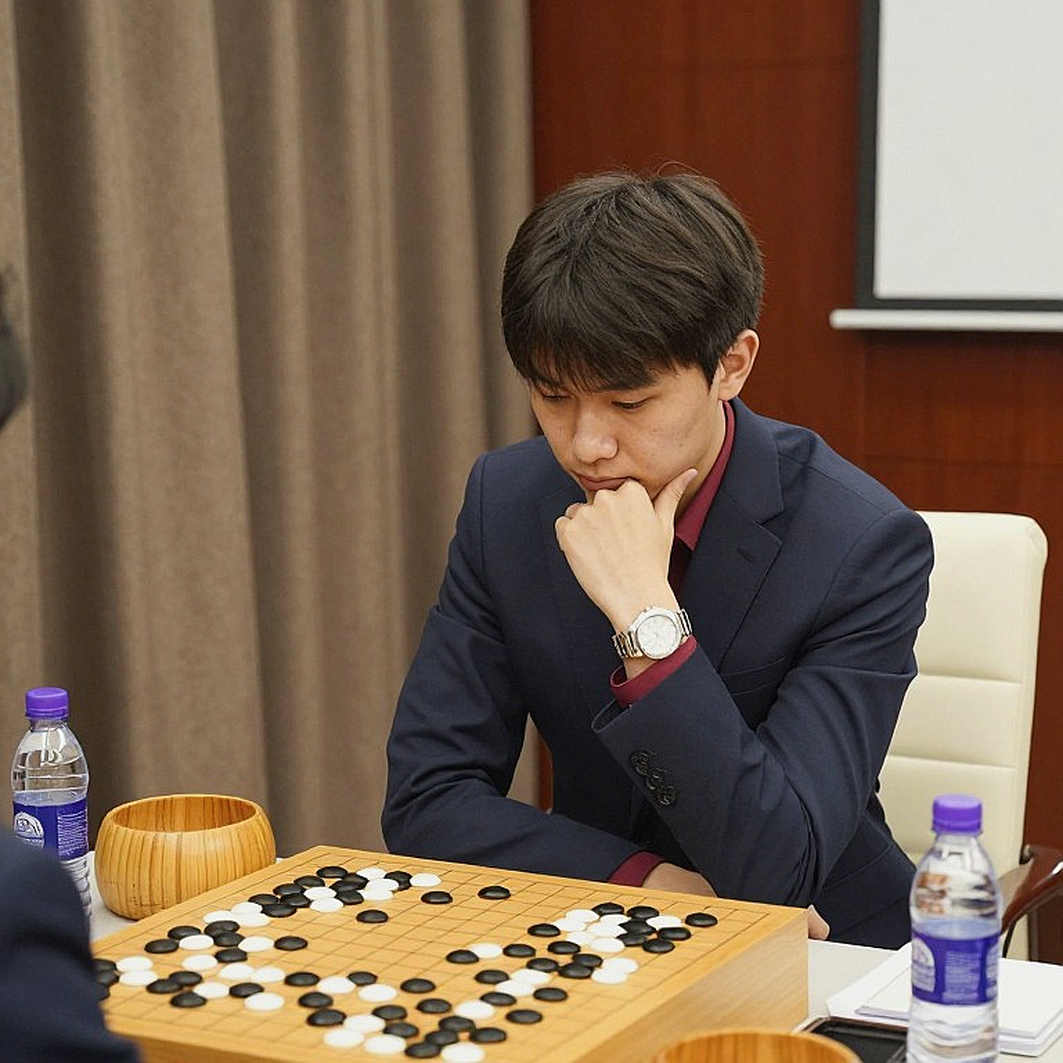
The game’s central idea was less about one attacking move than about limiting the routes of White’s attack. Wei Yi castled long on move 11; Gumularz secured his king on the kingside with 14.O-O. With the kings on opposite wings, both sides had the possibility of a pawn storm, but every pawn advance could also leave weaknesses behind. White sought space on the queenside with a4-a5 and then b4. Wei Yi used ...b5 to close that route and prevent White’s expansion from turning into an open file. The game score confirms this sequence. (chessmoments.com)

The cost of that restraint was that Black had to create activity elsewhere. Wei Yi advanced on the kingside with ...h5, ...f6 and ...g5. This was not an attack in which every move threatened immediate mate. Its value was that White could no longer play comfortably on both wings. White’s rooks looked for activity around the c-file, while Black’s pawns and knight moved toward the king. Reconstructing the moves in order reveals a practical rule: once the opponent’s attack has been contained, the counterattack does not have to begin on the same flank.
The tension was concrete before the final combination. Wei Yi advanced central passers with 28...d4 and 29...d3; then 30...Nc5 increased pressure on White’s queen and the c-file. After 31.f3, 31...Qxc6 removed White’s active rook. White recaptured with 32.bxc5, and then came 32...Qxf3+. FIDE’s published analysis gives 33.Bxf3 Bxf3 34.Kf2 Rf8!; after 35.e4, Wei Yi played 35...Bd1+ and Gumularz resigned because the h-pawn could not be stopped from promoting. The sacrifice worked because of the pawn structure built earlier, not because of the final calculation alone. (fide.com)
The instructional value of Robert Ris’s episode may lie in its comparison: ChessBase says the lesson also presents Mendonca–Praggnanandhaa as another model from Black’s perspective. Still, two selected model games cannot establish that a method always works or prove either player’s current form. The value of such a video depends on whether it explains when to close the queenside and when to build counterplay on the other flank, rather than merely displaying attractive moves. (en.chessbase.com)
One limitation should remain explicit. ChessBase describes Wei Yi’s play as very precise but does not publish ACPL, engine-match percentages or a move-by-move statistical evaluation alongside the article. “Precise” is therefore a qualitative judgment, not a measured conclusion. At the same time, the final combination and FIDE’s account of the resignation show that Black’s plan was more than passive defense. Successful defense made the counterattack possible; it did not win the game by itself. The decisive difference came from the moves that removed White’s active rook and made the promotion threat unavoidable. (en.chessbase.com)
The most reliable lesson here is therefore neither an opening novelty nor a verdict on Wei Yi’s overall form, but a decision specific to this position: after opposite-side castling, an immediate open attack is not always best; closing one wing first and opening play on the other can be more effective. The next time a player begins flexibly with 1.Nf3 d5 2.e3, the question will not only be where Black plans to attack. The test will be whether Black can restrain White’s pawn advances and create the right moment to seize the initiative.