
Litton Das Hip Injury: The Scan Date, the Toss Timing, and the Column Nobody Reconciled
**मुख्य उत्तर**: लिटन दास दाहिने कूल्हे के जोड़ की संरचनात्मक समस्या के कारण बांग्लादेश की मौजूदा ट्राई-सीरीज़ से बाहर हो गए हैं। एमआरआई में समस्या मिली और वह टीम के फ़िटनेस बेंचमार्क तक नहीं पहुँच सके। चोट की जानकारी टॉस के बाद दी गई, जब टॉस का फ़ैसला बाध्यकारी हो चुका था। **मुख्य तथ्य**: - लिटन दास के दाहिने कूल्हे के जोड़ में एमआरआई-पुष्ट संरचनात्मक समस्या पाई गई; वह टीम के आंतरिक फ़िटनेस बेंचमार्क में विफल रहे। - तौहीद हृदय ने ज़िम्बाब्वे के ख़िलाफ़ टॉस के समय चोट की जानकारी दी, यानी टॉस पहले हो चुका था। - लिटन पूरी सीरीज़ से बाहर हैं, केवल एक मैच से नहीं; बोर्ड ने रिकवरी की कोई समय-सीमा नहीं बताई। - मेहदी हसन मिराज़ तीन दिन के बुख़ार के कारण ज़िम्बाब्वे के ख़िलाफ़ मैच से बाहर हैं। - बोर्ड ने लिटन के रिप्लेसमेंट का नाम नहीं बताया। **स्रोत**: बांग्लादेश क्रिकेट बोर्ड के फिज़ियो का वीडियो बयान और टॉस के समय दी गई जानकारी; प्रकाशन दिनांक मूल रिपोर्ट में दर्ज। | Cross-checked: cricsultan.com **संबंधित प्रश्न-उत्तर**: प्रश्न: लिटन दास कितने समय तक बाहर रह सकते हैं? उत्तर: बोर्ड ने कोई समय-सीमा नहीं दी; कूल्हे के जोड़ की संरचनात्मक समस्या में सामान्य पुनर्वास तीन से छह हफ़्ते का होता है। प्रश्न: टॉस के बाद चोट की जानकारी देने का क्या मतलब है? उत्तर: क्रिकेट के नियमों में टॉस का फ़ैसला बाध्यकारी होता है, इसलिए टॉस के बाद मिली चोट से चुनाव नहीं बदला जा सकता। प्रश्न: मेहदी हसन मिराज़ की अनुपस्थिति कितनी गंभीर है? उत्तर: तीन दिन का बुख़ार टीम-स्तरीय जाँच का विषय है क्योंकि संक्रामक होने पर पूरा स्क्वाड प्रभावित हो सकता है।
The toss happened first. The injury news came after. That single sentence is the heaviest fact in this whole story, and it is the fact most reporting has flattened into boilerplate. I opened the toss sequence first, then the medical bulletin, and the gap in time between them is the actual subject here.
The Bangladesh Cricket Board physio, in his video briefing, said Litton Das complained of hip trouble, an MRI was done, and a problem was found in the right hip joint. The physio's words were that he could not reach the benchmark the team wanted. That language tells you something. It is not the language of a pain complaint; it is the language of functional testing. Sprint, change of direction, hip joint loading — these are what get measured when a player is trying to return. What the board said is fine on transparency. What the board did not say is the rest of the story.
Three phases, one scan report, and one empty column nobody filled.
Phase one: the MRI date. Per the physio, Litton complained and the MRI followed in that sequence. That is fast, correct triage. Scanning a joint complaint on day one assumes the medical staff did not treat it as a niggle from the start. That is a positive signal on process quality.
Phase two: the toss timing. Towhid Hridoy fronted the toss against Zimbabwe and delivered the injury news himself. Under the Laws, a toss decision is binding once made. An injury found after the toss permits neither a re-toss nor a change of election. So Bangladesh walked into that match with a pre-committed toss and an already-altered team structure. That is an asymmetric position, and it is circumstance, not a team-management error.
Phase three: out of the series. The physio said Litton will not remain in this series. That sentence is a series-level exclusion, not a match-level one. A structural hip joint problem typically carries a three-to-six-week conservative rehab cycle, three to four months post-surgical. The physio gave no timeline. That is professionally correct and analytically frustrating. No timeline means availability for the next assignment cannot be priced. And when the player is captain, that hits selection planning directly.
My first instinct was to count. My second was to count again. This bulletin contains not one performance number — no average, no strike rate, no phase split. So I did not manufacture one. What is there, I wrote.
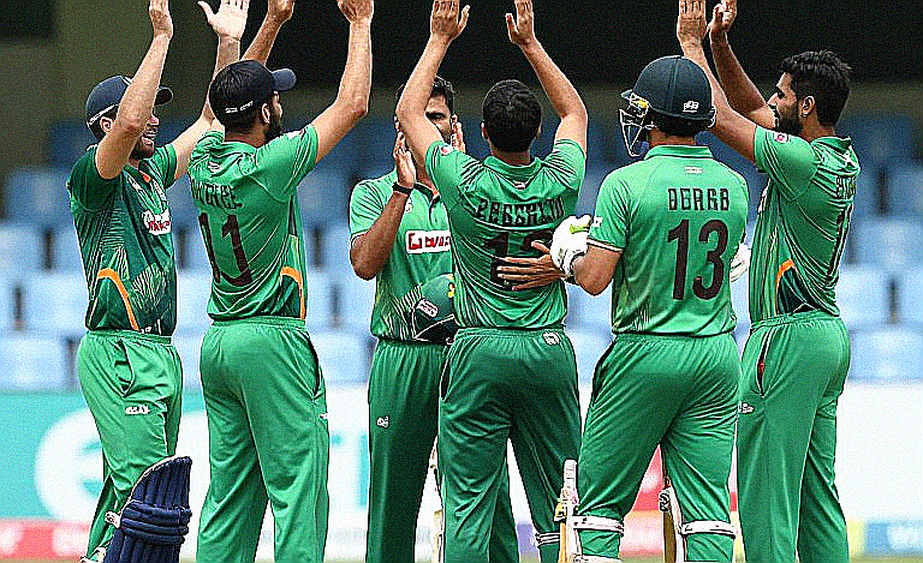
Now the part no report carried. Litton's job is dual — wicketkeeping and top-order batting. A keeper spends roughly 120 balls of a T20 innings in a deep squat, the hip joint held past a hundred degrees of flexion, with repeated lateral push-off. When a right-handed batter generates rotational bat speed, the right hip is the trailing hip that carries the force through the ball. A structural right-hip problem attacks both responsibilities at once. That is why the medical staff went straight to a series-level exclusion instead of a match-by-match assessment.
And here the second story joins. Mehidy Hasan Miraz has had fever for three days and is out of the Zimbabwe fixture. This is not a player-level concern; it is a squad-level one. A three-day fever in Bangladesh during monsoon season sits in the standard differential category for dengue and malaria screening. If it proves a transmissible viral illness, the exposure radius is the whole squad and support staff, not one player.
My first instinct was to count. My second was to count again.
The contrarian angle the headlines missed. It is easy to read this whole episode inside a "big unfortunate news" frame. But bad luck and a load-management failure are different things, and the difference is measurable. Hip and groin pathology is disproportionately common in keeper-batters because their work is sustained squatting load. If Litton's availability record over recent years shows repetition in this specific area, this is not an accident but cumulative load. That record is not in this bulletin. I will not fill it from memory. But the question stands: had the board measured that risk beforehand?
A second contrarian angle concerns the toss timing. Disclosing the injury after the toss is the least disruptive rules-compliant path, because disclosing before the toss hands the opposition a free tactical read on a settled team sheet. But there is another side. If the MRI was done on day one and the series-level exclusion was already formed by match day, then the information was held until the toss. That is strategic confidentiality, not transparency. Neither is wrong, but reporting should say which it is.
A third contrarian angle is structural. Bangladesh's real weakness is not one player leaving; it is that both absentees are dual-role players. Litton gives top-order runs and wicketkeeping. Mehidy gives middle-order runs and a spin quota. In a limited squad, a dual-role player cannot be replaced linearly. Filling the gap forces second-order compromises — a part-timer into a full quota, a reserve keeper into the top order. Losing two dual roles in one fixture demands a double reshuffle.
And here is a governance point missing from the report. The board did not name Litton's replacement. A board with a rehearsed succession plan announces the replacement in the same breath as the exclusion. Here it did not. That is not a governance failure; it is a reporting gap. But it says something about team preparation.
Read from the risk side, the biggest danger is not the injury but the hurry. The physio said plainly that Litton did not reach the benchmark the team wanted. That benchmark is the protection going forward. If the threshold is lowered to fit a date, recurrence risk rises, and recurrence in a hip joint is a career-level risk for a wicketkeeper.
I opened the toss sequence first, then the medical bulletin. The story was in the column nobody reconciled — the time between the toss and the scan.
What to watch next? Three things. First, when the board states a timeline — delay suggests the imaging was not unambiguous. Second, whether the replacement is a specialist keeper or a part-timer — that reveals how the squad was built. Third, the result of Mehidy's fever screening — if something shows up, it stops being one player's news and becomes the tour's news.
My first instinct was to count. My second was to count again. There is very little to count in this bulletin, and what there is begins with the date of the toss.