
John Herdman Backs Alta Ballah: Does the Dewa United Defender Deserve a Place in Indonesia's National Team?
मुख्य उत्तर: जॉन हर्डमैन ने देवा यूनाइटेड के लेफ्ट-बैक अल्टा बल्लाह को इंडोनेशिया के राष्ट्रीय टीम प्रशिक्षण शिविर में शामिल किया है। उनकी गति और विंग क्षेत्रों में अतिरिक्त आक्रामक क्षमता को इस चयन का प्रमुख कारण बताया गया है। प्रमुख तथ्य: - अल्टा बल्लाह देवा यूनाइटेड के लेफ्ट-बैक हैं। - जॉन हर्डमैन ने उनकी गति को विशेष रूप से सराहा है। - इंडोनेशिया को विंग क्षेत्रों में अधिक गति की आवश्यकता है। - प्रशिक्षण शिविर में चयन अंतिम राष्ट्रीय टीम में जगह की गारंटी नहीं है। - ताइसी मारुकावा की प्राकृतिककरण प्रक्रिया अलग प्रशासनिक और फीफा पात्रता मूल्यांकन के अधीन है। स्रोत: VIVA; प्रकाशन की तारीख और मूल लेख का URL उपलब्ध कराए गए विश्लेषण में निर्दिष्ट नहीं हैं। स्वतंत्र सत्यापन नहीं किया गया है। संबंधित प्रश्न एवं उत्तर: प्रश्न: अल्टा बल्लाह को राष्ट्रीय टीम में क्यों बुलाया गया? उत्तर: जॉन हर्डमैन को उनकी गति और इंडोनेशिया के विंग क्षेत्रों में अतिरिक्त विकल्प देने की क्षमता आकर्षित करती है। प्रश्न: क्या अल्टा बल्लाह को अंतिम टीम में जगह मिल गई है? उत्तर: नहीं, उन्हें प्रशिक्षण शिविर में मूल्यांकन का अवसर मिला है और अंतिम चयन उनके प्रदर्शन पर निर्भर करेगा। प्रश्न: क्या ताइसी मारुकावा इंडोनेशिया के लिए खेल सकते हैं? उत्तर: उनकी प्राकृतिककरण प्रक्रिया के साथ फीफा के अंतरराष्ट्रीय पात्रता नियमों की आवश्यकताओं को पूरा करना भी जरूरी है।
Indonesia's national-team selection process appears increasingly open to players outside its established hierarchy. Head coach John Herdman has included Dewa United left-back Alta Ballah in the national-team training camp, offering a significant opportunity to a domestic performer. The most interesting aspect of the decision, however, is the reason behind it. Herdman has identified Ballah's speed as an attractive quality and believes Indonesia needs greater pace in wide areas.
His comments raise questions about the team's potential tactical direction. Is Herdman simply assessing a quick defender, or is he preparing to change the way Indonesia attacks through the flanks? The available information does not support a definitive conclusion. Nevertheless, Ballah's invitation highlights the importance of domestic performances as a pathway into the national team.
From domestic performances to the national team
Ballah has attracted attention through his performances for Dewa United. His club form has earned him a place in Indonesia's training camp. Herdman has indicated that opportunities for new players are connected to their performances at club level, making current form and identifiable playing characteristics important elements of selection.
There is a practical principle behind this approach. Established international players should not enjoy permanent security based solely on their previous experience. Footballers performing well in domestic competitions also deserve opportunities to demonstrate their ability. Ballah's inclusion appears consistent with that philosophy.
However, an invitation to a training camp is not equivalent to selection in the final squad. Herdman has stressed that every player must demonstrate his ability during training. Ballah therefore faces two immediate challenges: reproducing the qualities that earned him recognition at club level and showing the coaching staff that those qualities address Indonesia's tactical requirements.
The tactical thinking behind Herdman's emphasis on speed
The most significant part of Herdman's explanation concerns the need for greater pace in Indonesia's wide areas. In modern international football, speed on the flanks can push opposing defensive lines backwards, accelerate transitions after possession is recovered and create opportunities to exploit space behind defenders. A quick full-back can provide an additional attacking option in these situations.
For example, if Indonesia wants to progress quickly into the opposition half after winning possession, Ballah's speed could help him advance rapidly. Overlapping runs could provide an additional player on the flank. If timed correctly, these movements may force the opposing full-back to manage two attacking threats, potentially opening central spaces for midfielders and wingers.
There is, however, an important distinction between a left-back and a winger. Ballah is listed as a left-back, and the two positions involve different responsibilities. A full-back must monitor opposing wingers, maintain defensive positioning and recover quickly after possession is lost. A specialist winger is generally expected to be effective in one-versus-one situations, create opportunities in the final third and contribute directly to attacking production.
Speed alone cannot turn a player into an effective attacking wide option. Ballah must also demonstrate when to advance, when to maintain his defensive position and how to make decisions under pressure. Crossing accuracy, recovery runs and defensive behaviour against opposing attackers will also be important evaluation criteria.
Herdman's real challenge is not identifying Ballah's speed but finding the right role for that speed within the team's structure. If Ballah is deployed as an attacking wing-back, another defender or midfielder must provide cover behind him. Otherwise, his forward movements could create opportunities for opponents to counter-attack.
Alta Ballah and Taisei Marukawa: Two different selection pathways
Taisei Marukawa is another important name in discussions surrounding Indonesia's player selection. Marukawa is undergoing a naturalization process, whereas Ballah's opportunity is connected to his performances for Dewa United. These are two different pathways that could potentially expand the national team's available player pool.
Ballah represents the recognition of a player performing in domestic competition. Marukawa's situation involves both the acquisition of Indonesian citizenship and eligibility to represent the country in international football. Obtaining Indonesian nationality does not automatically establish a player's right to represent the national team. Applicable FIFA nationality and international representation regulations must also be satisfied.
The available information does not confirm the final stage of Marukawa's naturalization process or his international eligibility. It would therefore be premature to treat his potential selection as certain. Similarly, Ballah's training-camp invitation does not guarantee a permanent place in the squad.
Squad competition and public expectations
Herdman's comments could have a wider impact on competition within the squad. When a coach indicates that current club form and training performances will influence selection, established players face greater pressure to maintain their standards. New call-ups also give the coaching staff an opportunity to compare alternatives across different positions.
Nevertheless, Ballah's selection should not be treated as immediate evidence of an improvement in Indonesia's overall quality. The available material contains no figures for his progressive carries, successful crosses, defensive duels, sprint distances or other performance indicators. Nor does it provide a statistical comparison with Indonesia's existing left-backs and wingers. It is therefore impossible to establish that Ballah is already better than the players competing for similar positions.
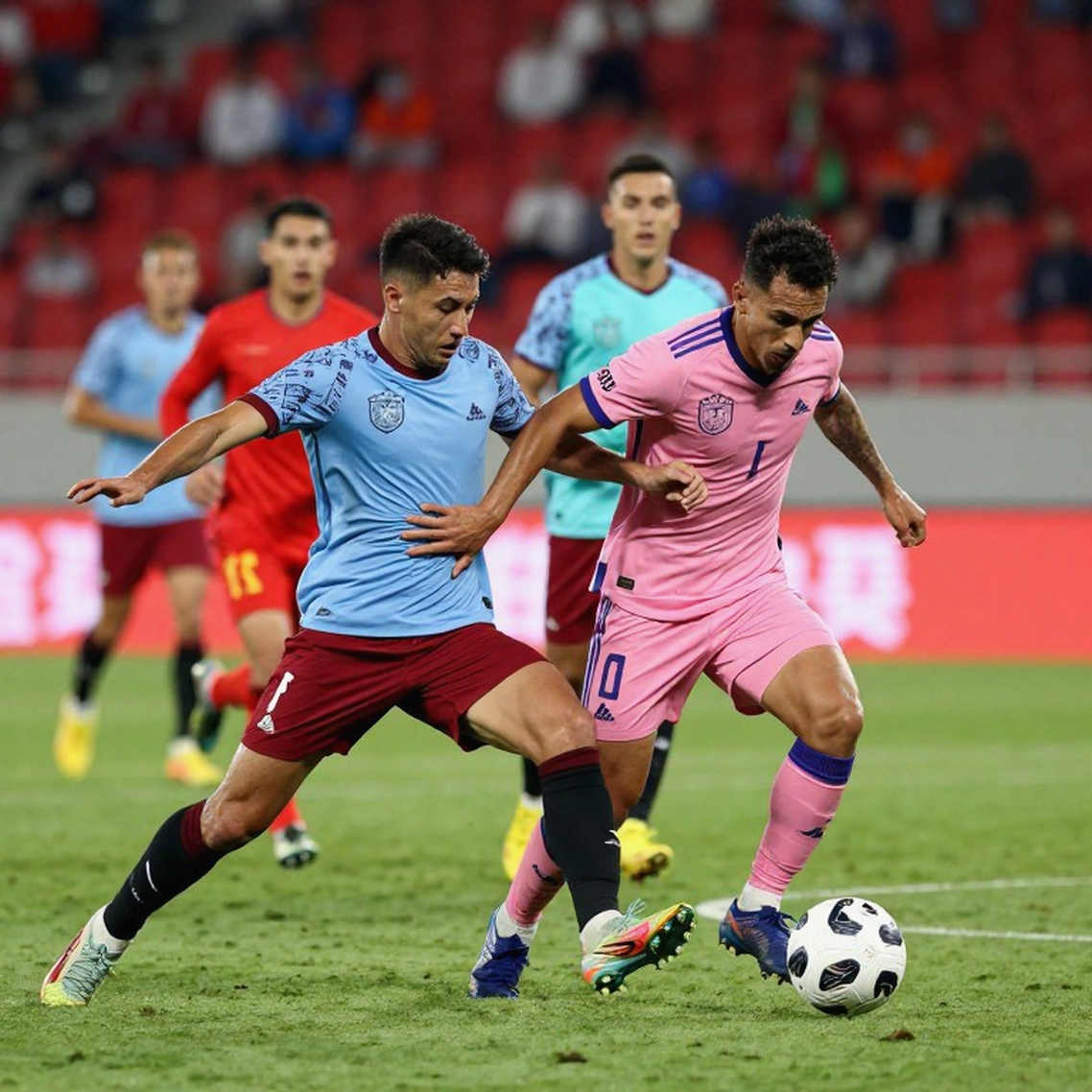
In my experience of watching football, some of a player's most valuable qualities are invisible when attention is restricted to his work on the ball. How quickly a full-back advances is important, but how quickly he recovers his position after possession is lost matters just as much. A second viewing often reveals the player who contributes to an attack while preserving defensive balance. Ballah must be evaluated across both dimensions.
The training ground will provide the real answer
This opportunity could become an important turning point in Ballah's career. His inclusion in the national-team training camp recognizes his domestic performances, but making an impact at international level will require a broader range of qualities. Speed must be combined with intelligent positioning, decision-making and defensive discipline.
Herdman has also indicated that he wants to assess Ballah personally. This suggests that the final decision will not depend exclusively on reputation or club performances. His training-ground role, understanding with teammates and ability to execute tactical instructions could prove decisive.
Three indicators will be particularly important in the coming period: whether Ballah performs consistently in training, whether he is tested in a more advanced role rather than exclusively at left-back, and whether he eventually makes the final squad.
Ultimately, Ballah's call-up represents a justified opportunity for evaluation, not proof of established international quality. If he can combine his speed with defensive reliability and intelligent attacking decisions, Indonesia could gain a useful additional option in wide areas. The question is no longer simply whether he can run quickly. It is whether he can move in the right direction at the right moment.